
Figma started as a place to design digital products.
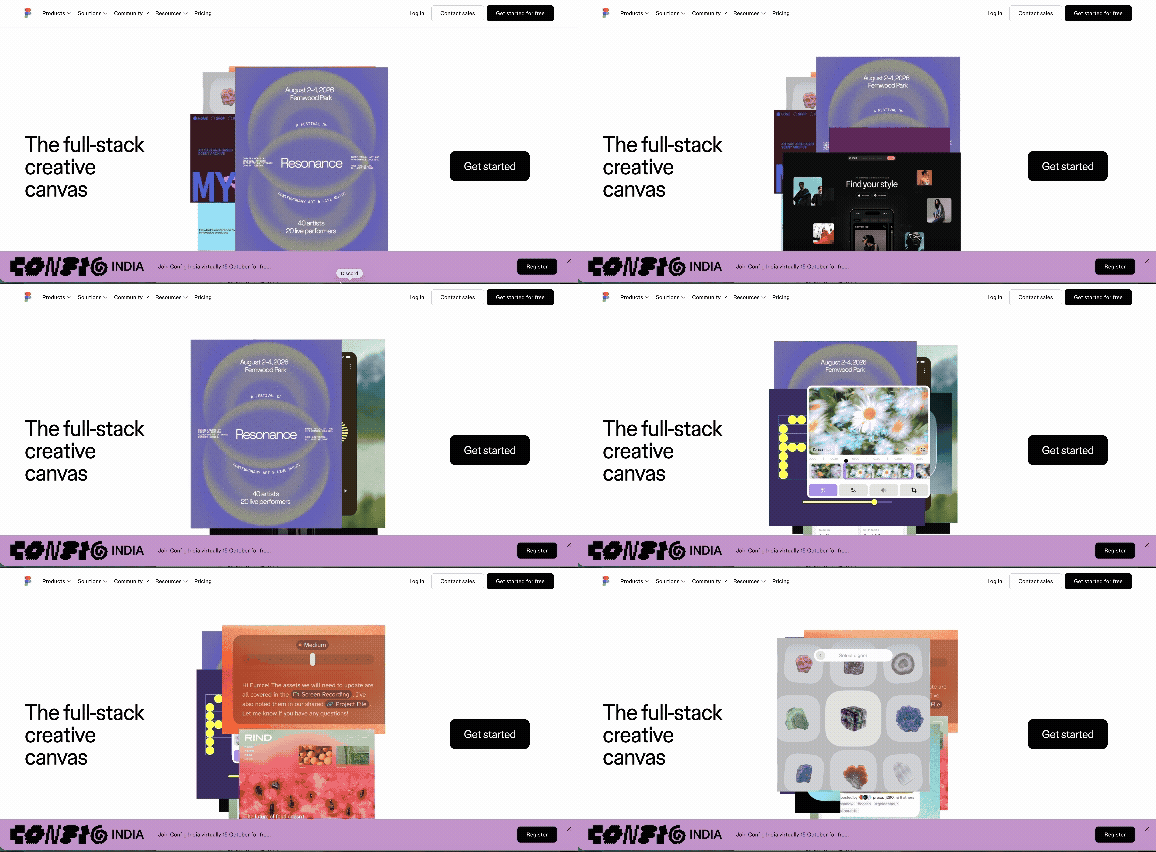
Today, it is expanding into more parts of the product-making process.
With Figma Sites, Make, Buzz, Weave and a growing range of AI-powered capabilities, Figma now reaches beyond interface design into websites, functional prototypes, marketing assets, image creation and interactive experiences.
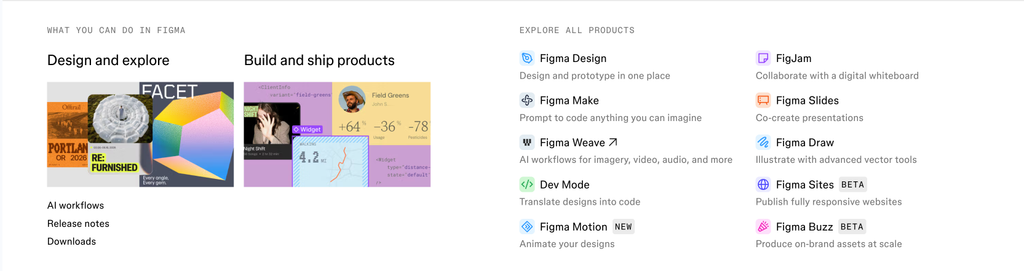
The shift is significant.
Figma is no longer just about designing what a product looks like. It is increasingly about how ideas become products.
From design tool to creation platform
The traditional product workflow often looks something like this:
Idea → design → prototype → development → launch.
Each stage can involve different tools, teams and handoffs.
Figma is increasingly bringing more of these activities closer together.
With Figma Make, ideas can be turned into functional experiences, with visual editing and annotations that allow designers to refine what has been generated.
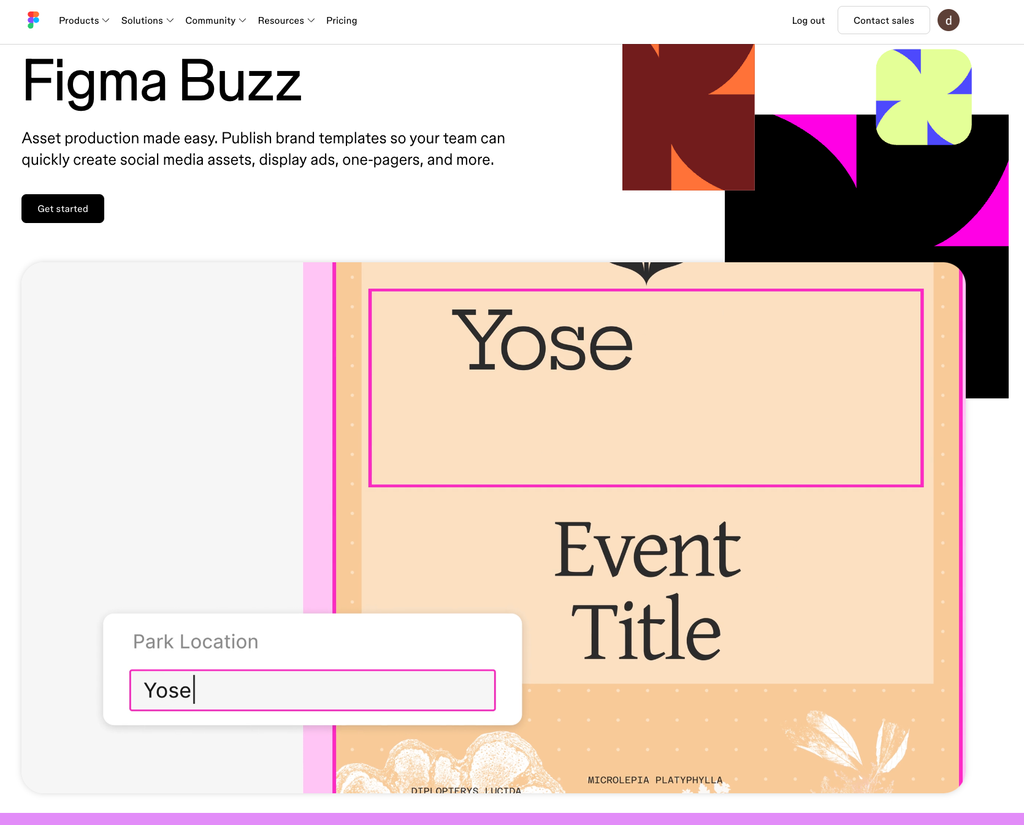
Meanwhile, Figma Sites brings design closer to publishing, while Buzz extends the platform into marketing content.
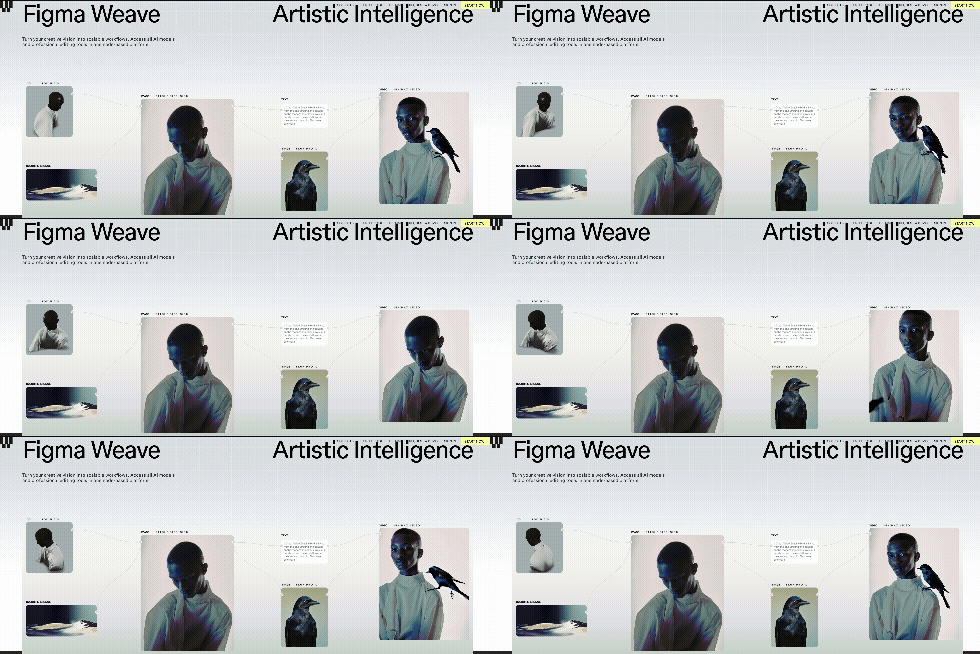
And Weave brings AI-powered image creation and editing into the creative workflow.
The boundaries between designing, building and producing are becoming less distinct.
AI is changing where the work happens
The biggest shift may not be any single product.
It is the growing AI layer across the platform.
At Config 2026, Figma introduced further AI capabilities, including its design agent and new ways to create generative plugins and shaders. These tools can support animations, interactions, publishing and access to underlying code.
This changes the role of the canvas.
It is no longer simply a place to draw interfaces.
It can increasingly become a place to generate, test, edit and build.
For product teams, that can reduce the number of handoffs between an initial idea and a working concept.
So, what happens to the designer?
This is where the conversation gets interesting.
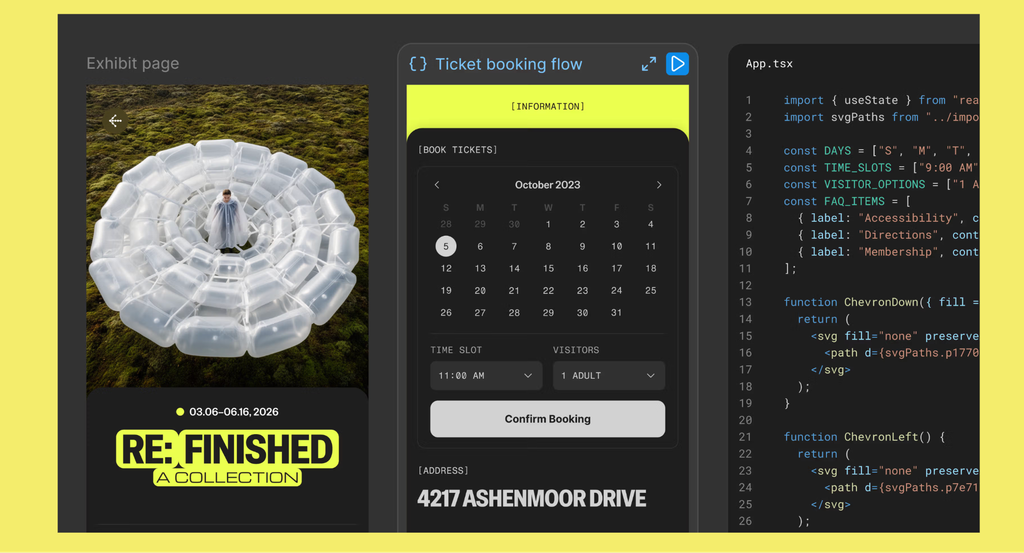
If AI can generate interfaces, functional experiences, visual assets and variations, does the designer become less important?
Not necessarily.
But the work changes.
Designers may spend less time producing every individual element from scratch and more time directing, evaluating and refining what gets produced.
The valuable skill becomes knowing what should exist in the first place.
A generated interface can be technically functional and still be confusing.
A generated visual can look polished and still communicate the wrong message.
A prototype can work and still solve the wrong problem.
AI can accelerate production.
It cannot replace product judgement.
The new challenge is not making things
For years, one of the biggest challenges in digital products was the time required to build.
As AI makes creation faster, another question becomes more important:
What is actually worth creating?
When generating multiple ideas becomes easier, choosing the right one becomes more valuable.
That puts greater emphasis on research, strategy, systems thinking and understanding users.
The designer’s role can therefore move further upstream from producing screens to shaping the problems, decisions and experiences behind them.
From designing screens to designing systems
Figma’s evolution reflects a broader change across the industry.
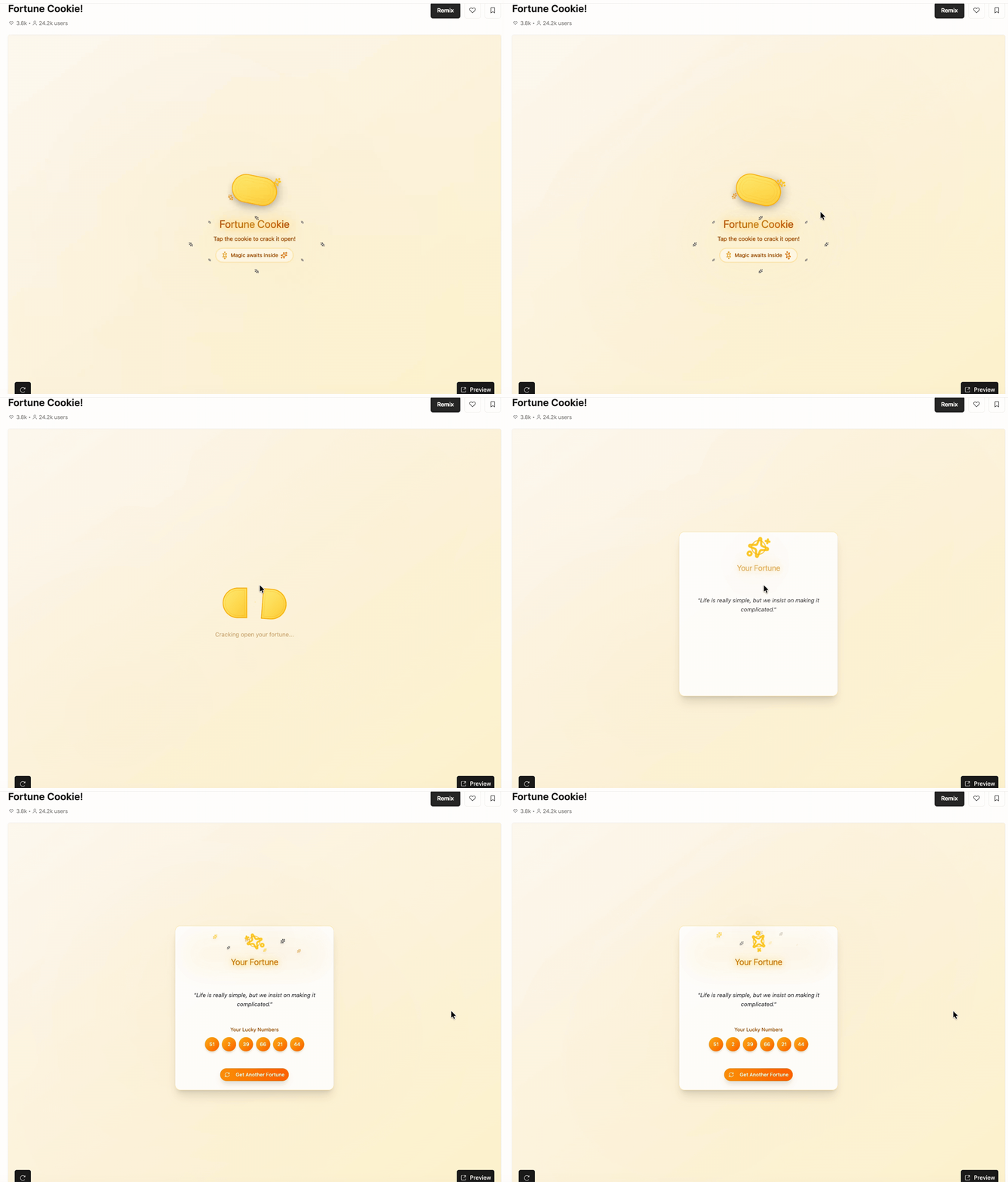
The designer is no longer necessarily working only on the interface.
They may be shaping the product concept, generating prototypes, working with AI tools, influencing code, producing marketing assets and testing ideas before development even begins.
The boundaries between designer, builder and creator are becoming increasingly fluid.
That does not make design less important.
It makes design judgement more important.
Because when creating something becomes easier, the advantage is no longer simply being able to make something.
It is knowing what to make, why it matters and when to stop.
The designer is no longer necessarily working only on the interface.
They may be shaping the product concept, generating prototypes, working with AI tools, influencing code, producing marketing assets and testing ideas before development even begins.
The boundaries between designer, builder and creator are becoming increasingly fluid.
That does not make design less important.
It makes design judgement more important.
Because when creating something becomes easier, the advantage is no longer simply being able to make something.
It is knowing what to make, why it matters and when to stop.
Figma’s bigger opportunity
Figma’s expansion into Sites, Make, Buzz, Weave and AI-powered creation represents more than a collection of new features.
It reflects a broader direction: bringing more of the creative and product workflow into one ecosystem.
For designers, this means the future may involve less time moving between tools and more time making decisions about ideas, experiences and outcomes.
Figma may be changing what a design tool can be.
And as the distance between idea, design and production gets smaller, the designer’s role may become less about producing everything manually and more about deciding what is worth building.
Stay Ahead with 365CREA
At 365CREA, we keep an eye on the latest shifts in UX, product design, technology and AI to understand what they mean for the way we design digital experiences.
Follow 365CREA for more insights, trends and ideas shaping the future of digital design.