
Google AI Studio: How AI is Shaping the Future of UX and Design
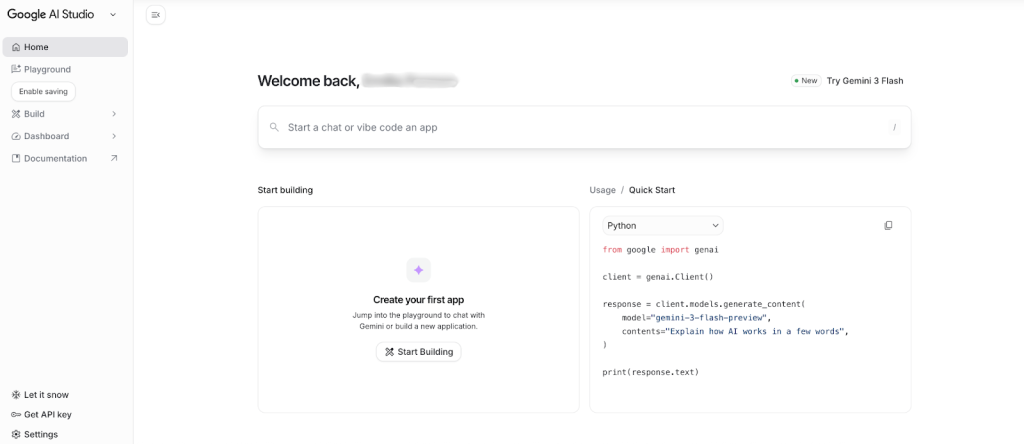
Source: [aistudio.google.com]
This visual shows the entry point where designers and developers start their journey.
The landscape of digital design is rapidly evolving as tools enable ideas to move from concept to prototype faster than ever. Among these tools, Google AI Studio is emerging as a platform that empowers teams to experiment, iterate, and innovate in ways previously reserved for large tech companies.
What Google AI Studio Brings to the Table
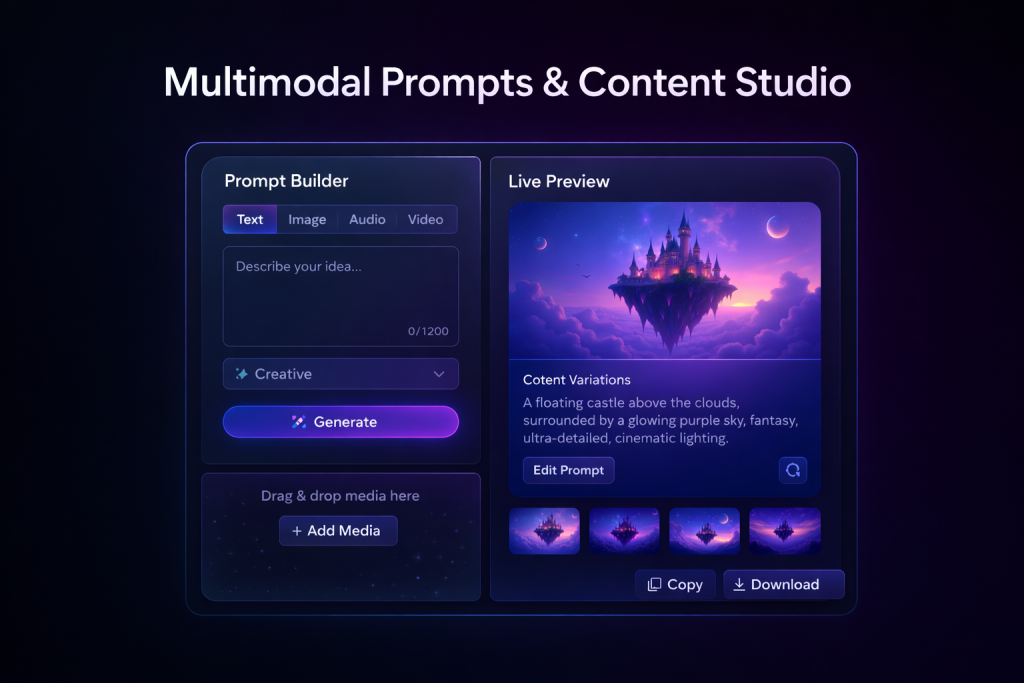
Multimodal integration in action: Combining text, images, and audio helps teams create prototypes that align closely with brand aesthetics and user needs.
Google AI Studio is a browser-based platform that makes AI experimentation accessible for designers, developers, and digital teams. Its key tools include:
- Generative AI Models: Create text, images, audio, and video outputs for prototypes, content, and interactive interfaces.
- Prompt Playground: Refine prompts to produce outputs tailored to UX and design needs.
- Multimodal Integration: Combine multiple types of inputs to generate richer, more engaging prototypes.
- Code Generation & Export: AI-assisted code suggestions and ready-to-use exports for faster development.
- API Access: Integrate AI models into websites, apps, or internal workflows seamlessly.
- Customization Controls: Adjust creativity, style, and output details to match brand and UX guidelines.
These features make it possible for teams to explore ideas, automate repetitive tasks, and enhance creativity without sacrificing quality.
Real-World Applications
Google AI Studio has already found practical use in digital workflows:
- UX/UI Design: Designers can quickly generate layout variations, test user flows, and iterate prototypes. Similar tools, like Figma AI plugins or Canva’s AI design suggestions, demonstrate how generative AI can accelerate decisions.
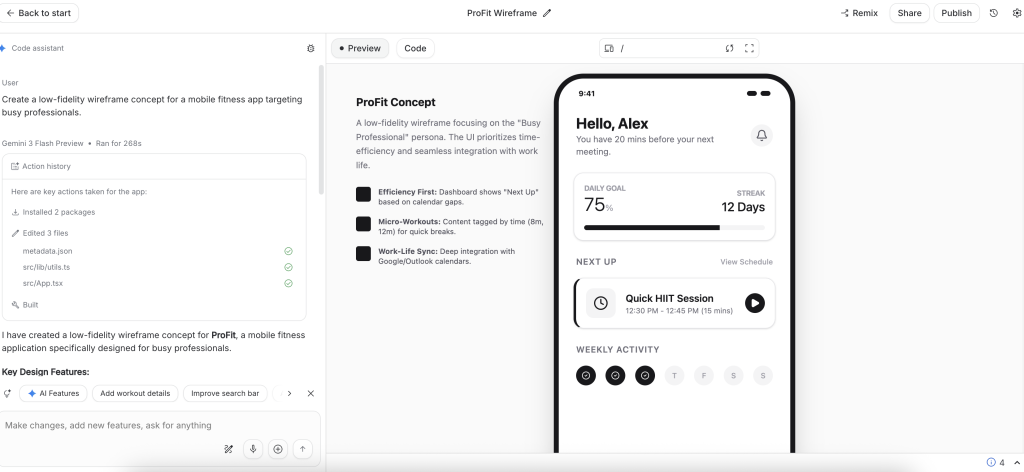
Source: [aistudio.google.com]
|This shows the literal transition from a text prompt to a rendered mobile UI.
- Content Creation: Microcopy, interface text, and website content can be generated and tested for tone, clarity, and engagement.
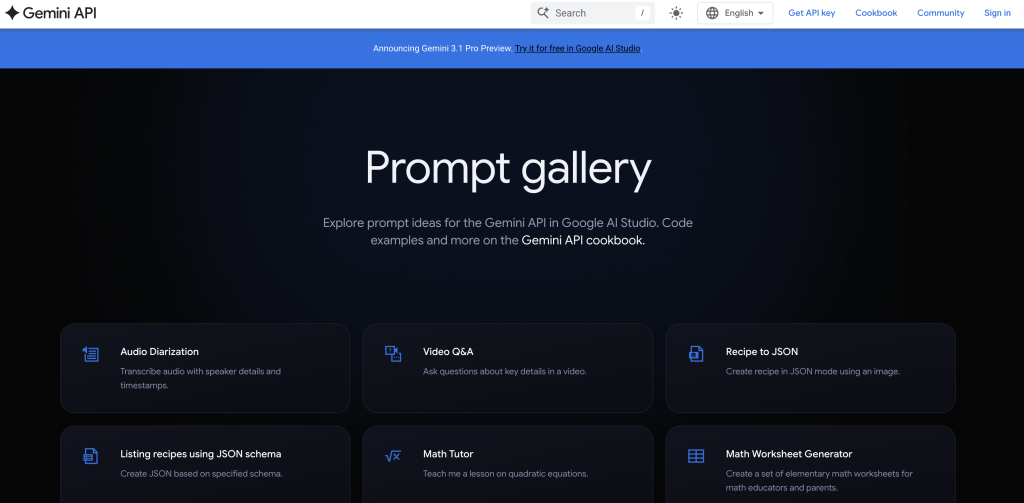
Source: [ai.google.dev/gemini-api/prompts]
The Gemini API Prompt Gallery offers a wealth of inspiration for creators, from transcribing audio with speaker details to transforming images into structured JSON data.
- Customer Experience: Prototypes for AI-powered chatbots, recommendation systems, or interactive interfaces can be created and refined rapidly.
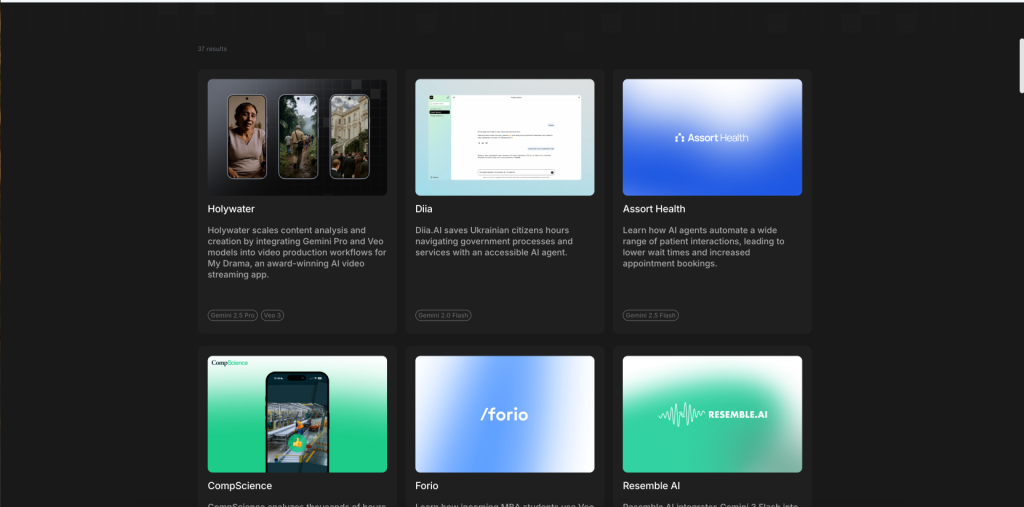
Source: [https://aistudio.google.com/case-studies]
Real-world impact: Global brands are utilizing Gemini models tom build intelligent agents that scale content production and streamline complex user interactions.
- Product Development: Predictive analytics and simulations allow teams to anticipate user behavior and optimize interfaces efficiently.
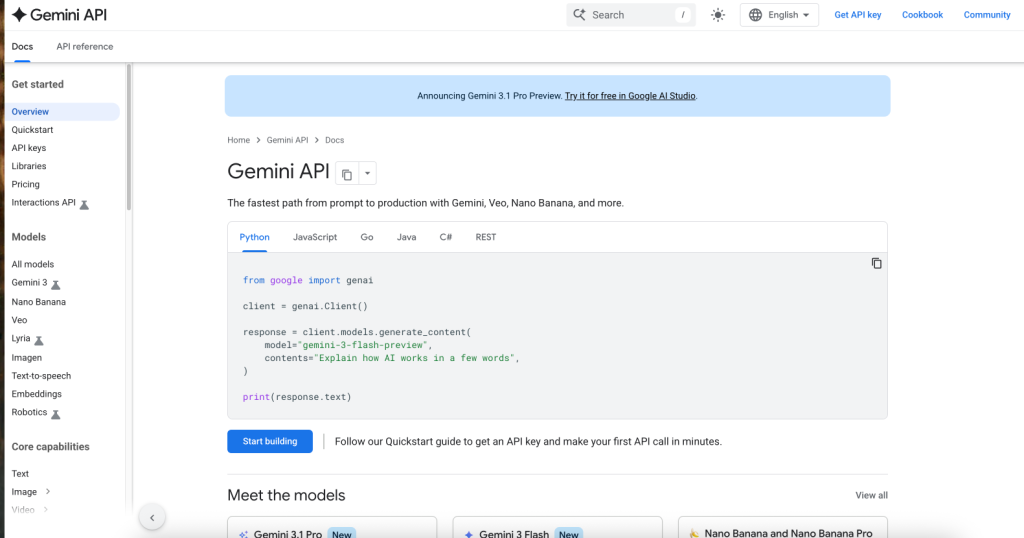
Source: [ai.google.dev/gemini-api/prompts]
Bridging the gap between concept and code: The Gemini API documentation provides the technical foundation for developers to integrate advanced models like Veo and Nano Banana into production-ready digital products.
Examples include Notion AI for workflow and content automation and Adobe Firefly for creative design, reflecting how AI can support both ideation and execution in real-world settings.
Benefits for UX and Design Teams
Integrating Google AI Studio into design workflows brings several advantages:
- Faster Iterations: Teams generate prototypes and content quickly, freeing time for strategy and creativity.
- Better Experimentation: Designers test multiple iterations with minimal manual effort, which supports data-informed decisions.
- Seamless Collaboration: Designers, developers, and UX researchers can work together with AI acting as a co-designer.
- Innovation Opportunities: AI helps explore new interactions, interfaces, and user experiences that would otherwise require significant resources.
Consequently, teams refine even complex responsive layouts across devices more efficiently, which shortens timelines and improves quality.
Looking Ahead
AI is becoming embedded in every stage of digital experience design. Platforms like Google AI Studio enable teams to experiment, innovate, and deliver adaptive, intuitive, and compelling digital experiences faster than ever.Why It Matters to 365CREA
At 365CREA, exploring and sharing insights on UX, digital strategy, and design innovation is part of our core mission. Tools like Google AI Studio show how emerging technologies can support smarter, faster, and more user-focused experiences — topics we often highlight in our UX Hub series for businesses and creators looking to stay ahead in the digital world.
6 comments
mobic 7.5 mg
April 4, 2026 at 2:10 pmmobic 7.5 mg
mobic 7.5 mg
metoprolol beta blocker
April 4, 2026 at 3:13 pmmetoprolol beta blocker
metoprolol beta blocker
zithromax 500mg
April 4, 2026 at 8:08 pmzithromax 500mg
zithromax 500mg
antibiotics for pneumonia
April 5, 2026 at 10:15 amantibiotics for pneumonia
antibiotics for pneumonia
lamictal
April 8, 2026 at 8:29 pmlamictal
lamictal
esomeprazole magnesium 40 mg price
April 15, 2026 at 12:15 pmesomeprazole magnesium 40 mg price
esomeprazole magnesium 40 mg price
Comments are closed.